Grocery and refrigeration
Smarter grocery and refrigeration equipment starts here for efficient cooling and energy use
What are efficient grocery and refrigeration technologies?
Efficient grocery and refrigeration technologies include advanced systems and equipment designed to reduce energy use, maintain product quality and support reliable store operations. These solutions range from high‑efficiency refrigerated display cases and walk‑in coolers to variable‑speed compressors, integrated controls and leak‑resistant refrigerant systems.
Modern refrigeration equipment improves performance through optimized airflow, improved insulation, adaptive defrost functions and low‑global‑warming‑potential (GWP) refrigerants. Together, these technologies maintain precise temperatures while helping reduce operating costs and environmental impact.


Why use efficient grocery and refrigeration technologies?
Refrigeration is one of the largest energy consumers in grocery stores and convenience markets, often accounting for 40–60% of total electricity usage. Upgrading to efficient systems reduces energy bills, improves equipment reliability, and maintains consistent food and beverage quality and safety. High‑efficiency technologies also extend equipment life by reducing runtime. These improvements support operational savings while creating a better shopping experience with quieter, more comfortable store environments.

Energy savings
Refrigeration is often one of the largest energy users in grocery stores and convenience markets, sometimes making up 40-60% of total electricity use. Upgrading to high-efficiency systems lowers energy consumption and can help lower utility costs.
Reliability
Efficient technologies reduce system runtime and wear, helping extend equipment life and minimize unplanned downtime. Improved controls also support more consistent temperatures and safer food storage.
Product quality and safety
Enhanced airflow, precise temperature regulation and optimized defrost cycles help maintain consistent product conditions, improving freshness and reducing spoilage risk.
Comfort and shopping experience
High-efficiency systems operate more quietly and reduce heat output into aisles, creating a more comfortable environment for customers and employees.
How to use efficient grocery and refrigeration technologies?
Efficiency upgrades can be installed in both new construction and existing stores. Many improvements can be added to current equipment through retrofits, while new equipment can be purchased with high-efficiency components already built in. Common upgrades include:
- ENERGY STAR® refrigerated cases with improved insulation and efficient lighting
- LED case lighting to replace traditional lighting
- ECM or PMSM motors for improved fan performance
- Variable-speed compressors that adjust to real-time cooling demand
- Advanced controls that optimize suction pressure, defrost cycles and case temperatures
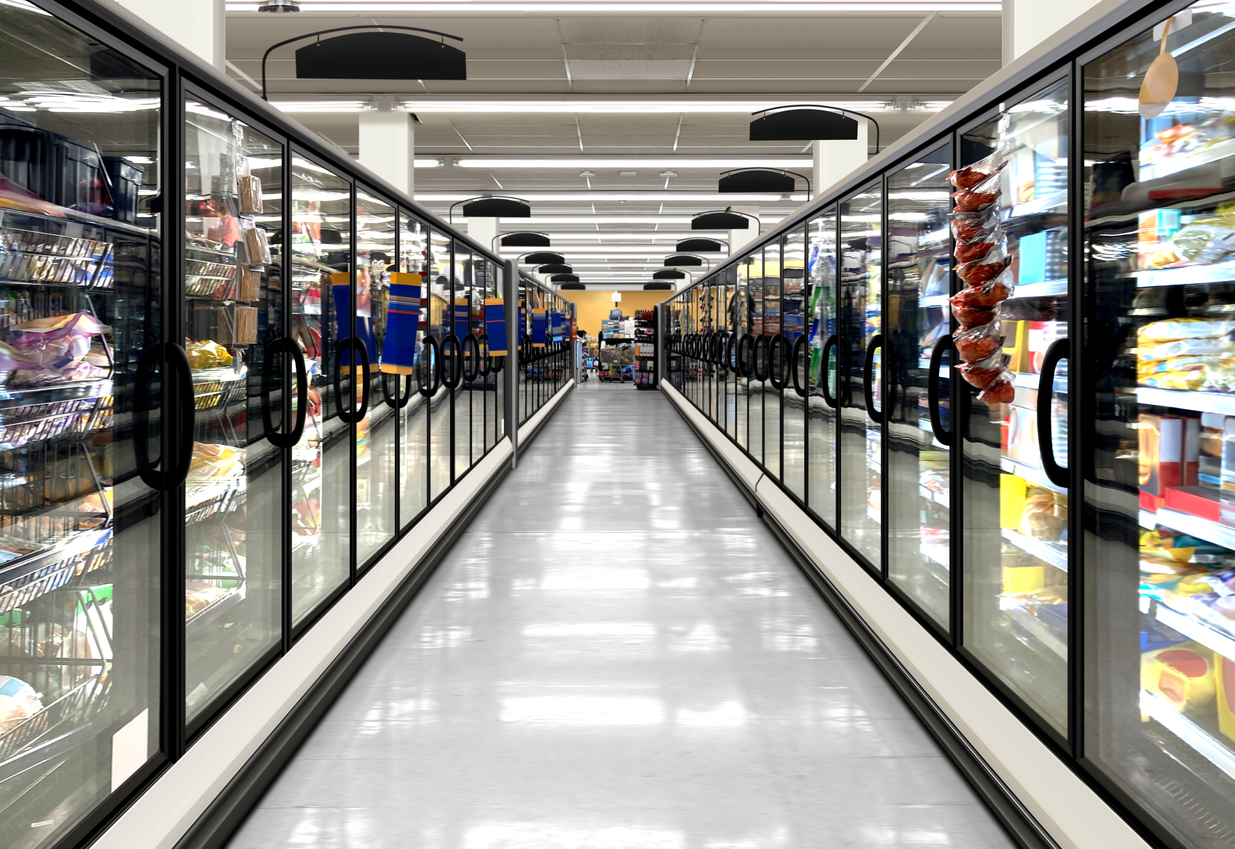
- Case doors for open refrigerated cases to significantly reduce energy loss
Maintenance matters: Regular upkeep is essential for maintaining efficiency. Cleaning condenser and evaporator coils, repairing worn gaskets, checking for refrigerant leaks and verifying refrigerant change all help refrigeration systems maximize performance and efficiency.

Ready to improve efficiency and reduce operating costs?
Learn about high-efficiency refrigeration solutions and available rebates to make your upgrade more affordable.
FAQs
What contributes most to refrigeration energy use?
Open refrigerated display cases, older compressors and inefficient defrost controls account for a large portion of energy use. Adding doors to open cases and upgrading to high‑efficiency components can significantly reduce energy use .
Can older refrigeration equipment be upgraded without full replacement?
Yes. Many systems can be retrofitted with ECM motors, LED lighting, advanced controls, case doors, and improved insulation. These upgrades help provide substantial energy savings without replacing the entire system.
What role does maintenance play in refrigeration efficiency?
Proper maintenance is important. Cleaning coils, repairing gaskets, checking airflow, detecting leaks and verifying refrigerant charge all help systems operate efficiently reduce energy use and prevent the likelihood of equipment failures.
What are ECM and PMSM motors and why are they beneficial?
Electronically commutated motors (ECMs) and permanent magnet synchronous motors (PMSM) are high-efficiency fan motors used in refrigerated cases and walk ins. They use significantly less electricity, run cooler and offer improved reliability compared to older shaded pole motors.
What are the benefits of variable‑speed compressors?
Variable‑speed compressors adjust output based on real‑time cooling demand, reducing energy use, lowering operating costs, improving precise temperature control and reducing system wear over time.
How do advanced refrigeration controls help save energy?
Controls such as anti-sweat heater (ASH) controls, smart defrost controls and evaporator fan controls reduce unnecessary run time. Many systems also offer remote monitoring and alerts to prevent equipment downtime and product loss.
Why is it important that I replace torn and worn gaskets on refrigerated case doors?
When a gasket is torn, cracked or no longer sealing properly, cold air escapes from the case allowing warm air to enter. This forces refrigeration equipment to work harder and run longer cycles to maintain proper temperature, which increases energy use and accelerates equipment wear. Replacing gaskets is a simple, low‑cost maintenance step that improves refrigeration performance, supports long-term operational and energy savings goals and helps ensure products stay fresh and safe for customers.
Related technologies
Commercial electrification assistance
Efficiency Works provides a variety of resources to support commercial electrification for industries of every type. Explore incentives for upgrading to electric appliances, learn about process electrification through study incentives and discover ways to increase energy efficiency within your facility.

