
Smart thermostats
Smarter control of comfort and savings
What is a smart thermostat?
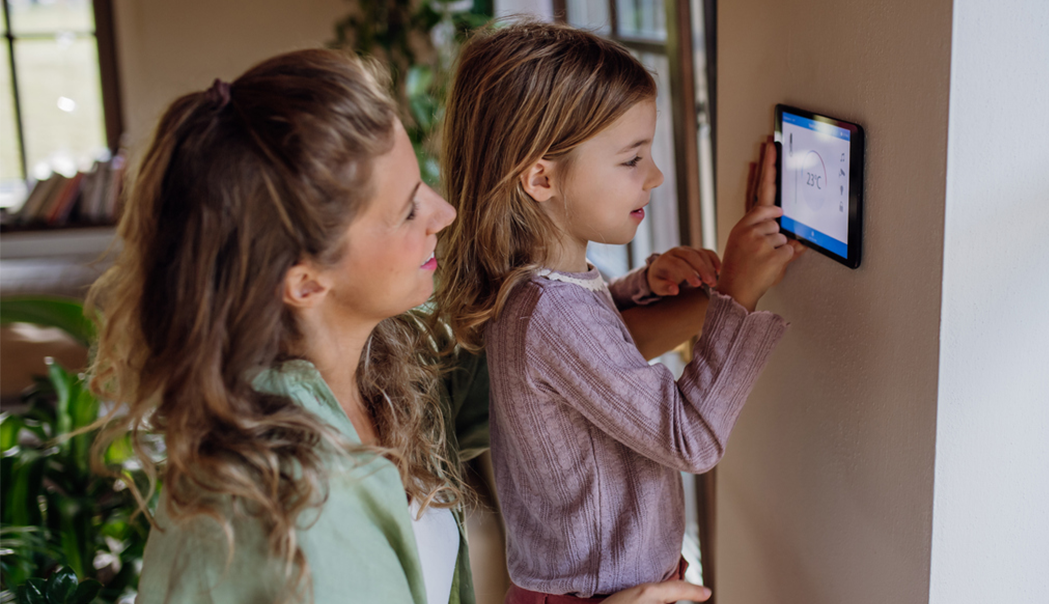
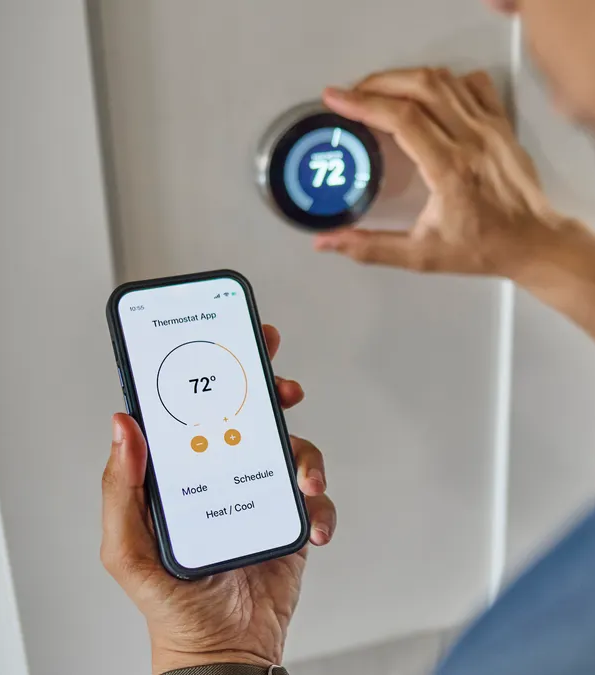
Smart thermostats are Wi-Fi-connected devices that help control certain heating and cooling systems more efficiently. Unlike traditional thermostats, which rely on manual adjustments, smart thermostats offer features such as remote access (typically through a mobile app) and scheduling capabilities. Some models also offer learning capabilities that adapt to your routine, along with energy usage reports and voice assistant integration.
These devices can help maintain comfort, reduce energy use and give you more control over how your home or business uses heating and cooling throughout the day.

Why use a smart thermostat?
Convenience: Smart thermostats make it easy to set schedules that match your daily routine. Most models allow you to adjust temperatures on the device itself or remotely through an app. Some also use occupancy information, utility time-of-use rates or other learning scenarios to automatically optimize settings.
Efficiency: Smart thermostats, especially those that are ENERGY STAR®-certified, help optimize heating and cooling. If a thermostat is set to an optimized schedule, users will typically save on energy costs.
Comfort: Some smart thermostats offer optional room sensors that help maintain comfort in areas farther from the main thermostat control location. These sensors help even out temperatures in commonly used spaces. . Note: This can increase energy usage if a room sensor is set multiple degrees higher than the main thermostat control.
Flexibility: Some smart thermostats can support demand flexibility programs by allowing utilities to make temporary adjustments to thermostat settings during high-energy-use periods. This helps improve system reliability and supports grid stability.
How to use a smart thermostat?
Most smart thermostats can be installed as a DIY project if you are comfortable connecting wiring to the thermostat. HVAC technicians or electricians can also install and set up a smart thermostat if you prefer professional assistance.

Heating system compatibility
Smart thermostats are available for different types of systems, including:
- Low-voltage HVAC systems: heat pumps, natural gas furnaces and central air conditioners
- Line-voltage systems: electric baseboard heaters, radiant electric heating and fan-forced heaters
Line-voltage smart thermostats can typically replace older bimetal thermostats and provide improved temperature control, scheduling and remote access features.
Electrical requirements
Most units need about 700 cubic feet of surrounding air space, which is about the size of a 10 ft x 10 ft room with a 7 ft ceiling. Some compact models can operate with as little as 450 cubic feet of air.
Ready to upgrade your comfort and efficiency?
Efficiency Works offers rebates for qualifying HVAC and baseboard heating smart thermostats.
FAQs
How do I know what type of smart thermostat to buy?
Start by determining what type of heating or cooling system you have.
Low-voltage (HVAC) smart thermostats work with heat pump systems, natural gas furnaces and central air conditioning systems.
Line-voltage smart thermostats work with electric baseboard heating systems and radiant electric systems.
Most smart thermostat brands offer online compatibility tools to help you choose the right model for your system.
Does ENERGY STAR® certify smart thermostats?
Yes. ENERGY STAR® certifies smart thermostats that meet high performance and energy-saving standards. Click here to find an ENERGY STAR® certified smart thermostat. Efficiency Works requires HVAC smart thermostats to be ENERGY STAR® certified to qualify for a rebate.
Can smart thermostats be used in commercial buildings?
Some residential-style smart thermostats can be used in many small commercial spaces if they are compatible with the building’s HVAC system. They work best in buildings with simpler, single-zone equipment similar to residential systems. Larger or more complex commercial buildings typically require networked or centrally managed systems for optimal performance and scalability. Start with an Efficiency Works advising call to learn which option might be the best for your needs.
What is the difference between a smart thermostat and a programmable thermostat?
Smart thermostats are Wi-Fi enabled and offer remote control through an app. They can also offer additional features such as learning algorithms, occupancy sensing, energy-use insights and automatic optimization. Programmable thermostats cost less than smart thermostats, but rely on fixed, manually created schedules and lack connected features. This can have the potential to use more energy, especially when the premise is unoccupied or schedules are not updated.
Does Efficiency Works control thermostat settings?
Efficiency Works will be incorporating smart thermostats into demand flexibility program offerings to help support system reliability. Participation in the program is voluntary. When enrolled, the program will send signals to the thermostat to make small, temporary temperature adjustments to help manage electric demand. Not all smart thermostats will be able to receive signals from the program.

